About instant crush

Marketing has been getting faster. It has not been getting better.

For years, marketing has been getting faster, cheaper, and more automated. It has not been getting better. We have been inside long enough to see why.

When the foundation is not there

What it looks like when the foundation is not there.

You can usually tell from the outside.

Activity is high. Campaigns ship, content gets made, dashboards fill up. But the activity does not add up to anything. Marketing KPIs climb while business results stay flat. Budget goes out the door on things nobody can confidently tie to growth. The founder, the marketing team, and the agency are each working from a different picture of what success looks like, and nobody has the standing to settle it.

The reason is simpler than it looks.

Decades of evidence on how buying actually works keep pointing at the same two things. Whether buyers think of you when it is time to buy. And whether buying you is the easy option when they do. Almost everything else, the campaigns, the creative, the channels, the content, is either serving those two outcomes or leaking value past them.

Most marketing is leaking.

Once you see the two through that lens, the waste becomes obvious. A performance campaign that drives clicks but nobody remembers the brand a week later - that's spending on the second thing while quietly eroding the first. A beautifully crafted brand story that never makes it into the moments buyers actually decide - that's the first thing without the second. A year of content output aimed at SEO rankings rather than at getting thought of when it matters - that's effort pointed at neither. Every marketing team has some version of this running, usually several.

None of this is visible if you are only watching the dashboards. The dashboards report on activity, and activity always goes up. What they cannot show you is whether the activity is building the two things that decide whether marketing works - or whether it is spending budget around them.

Why it keeps happening

The judgement was never evenly distributed.

The knowledge to do this well is not evenly distributed. The people who can apply the evidence - who know how buyers remember and choose, who can weigh long-term brand building against short-term activation - are rare, senior, and expensive. They cluster at A-brands and at the top tier of agencies. They do not, as a rule, end up inside a growing company with a marketing team of three.

Everyone else builds their marketing without that judgement in the room. Not because they do not want it. Because it was never available to them.

AI has changed the math. Execution has collapsed in cost and time - teams that used to run three experiments a month can run thirty, agencies that used to staff a brief can ship it overnight. Faster is genuinely better when you are building on something real. When the foundation is missing, it just makes the gap between how much you are doing and how much of it matters grow faster.

The scarcity has not gotten better. The cost of operating without it has gotten worse.

What we believe

The principles behind Instant Crush.

Marketing is a decision problem before it is an execution problem.

Most companies that cannot grow their marketing are not failing at execution. They are failing at the decisions that should have come before it. Better execution on the wrong decision is not an improvement; it is a faster way to the same outcome.

Long-term brand building and short-term activation are not a choice.

Companies that pick one and neglect the other do not get 50% of the result; they get less than either half would have produced alone. The two build on each other, and marketing that pretends otherwise is quietly losing ground every quarter.

Data informs decisions. People still make them.

Dashboards report. Models correlate. AI summarises. None of them decide - not well, and not yet. The judgement that turns data into direction still has to come from people who understand what the numbers mean, what they do not mean, and what is not being measured at all.

Who we are

Two founders, one shared diagnosis.

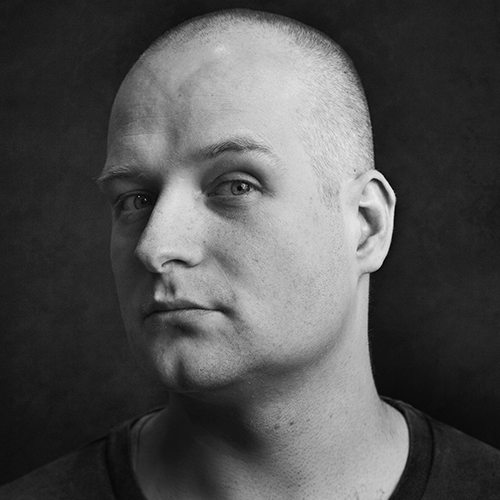
Portrait of Rolf Mulder

Co-founder

Rolf Mulder

Rolf has spent the last fifteen years leading marketing inside hypergrowth scale-ups - environments that do not reward theory. They reward people who can turn a complicated business into a story the market understands, build the marketing organisation that tells it, and keep both intact while the company doubles.

He led marketing at Mendix, Easygenerator, and Shypple - three of the fastest-growing B2B scale-ups to come out of the Netherlands in the last decade - and co-founded Upscale Talent on top of that. In each of those companies the same pattern held: the business was growing faster than its marketing foundation, and the foundation had to be built while the house was already on fire. That is where marketing science stops being abstract. You either understand how buyers actually remember and choose, or you waste another quarter of a budget you cannot afford to waste.

He co-founded Instant Crush because the companies he kept being brought in to help all needed the same thing, and almost none of them could get it.


Portrait of Frank Boelen

Co-founder

Frank Boelen

Frank has spent the last twenty years building the systems that run underneath things - the parts that are invisible when they work and unmissable when they do not. For most of that time it was product and infrastructure. For the last several years, it has been machine learning, language models, and the kind of agent-driven systems that Instant Crush is built on.

He has led technology inside startups, inside scale-ups, and inside companies trying to navigate serious technological change from the inside. The common thread has always been the same kind of question: not can we build this, but what happens to the business if we build it the wrong way. That is the lens he brings to Instant Crush. AI changes the production surface of marketing; it does not change the underlying mechanics of how buyers decide. Getting the engine right means building for the mechanics, not the hype.

He co-founded Instant Crush with Rolf because the same pattern kept appearing in his own work - companies trying to execute their way out of a problem that was actually upstream. The fix is a systems problem, especially the kind that only becomes tractable once agents can reason inside it, and systems problems are the ones Frank knows how to solve.

Why we built it

The foundation was never the problem. The access to it was.

For most of the last half-century, the knowledge to apply marketing science to real companies existed. It just did not travel. It stayed where the people who carried it stayed, inside A-brands, inside top-tier agencies, inside the careers of a small number of senior operators who could each be in one place at a time.

That has changed.

Instant Crush is the foundation - the same evidence, the same reasoning, the same senior judgement made available to companies that were never going to be able to hire it. Not automated away. Not simulated. Applied. Consistently, to the specific decisions a specific company is making, in the week they are making them.

Welcome to Instant Crush.

Next step for better marketing

Start with one decision

You do not need to commit to a long project. Start with a short conversation. We will tell you which product fits your situation, or we will tell you that none of them do.